
The pattern in one paragraph
Across the examples below, the reaction depended less on whether AI was used and more on how it looked. Animals, toys, miniatures and stylised worlds were accepted or even praised. Photoreal people, especially in emotional holiday spots, were called soulless or uncanny. Speed and cost were real wins in every case: production times dropped from months to weeks or days.
All 9 examples at a glance
| Ad | Year | Outcome |
|---|---|---|
| Kalshi, NBA Finals | 2025 | About $2,000, 3M+ views |
| Coca-Cola, Holidays Are Coming | 2024 | Two months instead of a year; mixed reaction |
| Coca-Cola, Holidays Are Coming | 2025 | About a month; quieter criticism |
| Google, animated turkey | 2025 | Ran without an AI announcement |
| Toys"R"Us, origin story | 2024 | Criticised for changing faces |
| McDonald's Netherlands | 2025 | Pulled after 3 days |
| Volvo Saudi Arabia | 2025 | Withdrawn after reviews |
| Guess in Vogue | 2025 | Backlash over disclosure |
| Sitechecker, SEO MCP ad (ours) | 2026 | 89 reactions, 50 comments on LinkedIn |
1. Kalshi: an NBA Finals ad for about $2,000
In June 2025 the prediction market Kalshi aired an AI ad during the NBA Finals. It was made with Google's Veo 3 by filmmaker PJ Accetturo for around $2,000 (Understanding AI), and eMarketer reported it passed 3 million views (eMarketer).
Why it worked: it leaned into absurd, fast, funny scenes where nobody expects realism. The weirdness was the point.
For B2B: humour and exaggeration hide AI's quirks and get attention in a serious feed.
2. Coca-Cola, "Holidays Are Coming" (2024)
Coca-Cola remade its classic truck ad with AI studios Secret Level, Silverside AI and Wild Card, using tools including Runway, Kling and Luma (Tom's Guide). Silverside said it took two months, against about a year for traditional production.
The reaction: mixed. Some viewers called it soulless, while a sentiment survey reported mostly neutral reactions.
For B2B: cutting production time is easy to sell internally. Emotional, human-centred stories are where AI gets judged hardest.
3. Coca-Cola, "Holidays Are Coming" (2025)
The 2025 version reportedly took more than 70,000 video clips, and Coca-Cola's CMO said the timeline went from a year to around a month (Understanding AI). This time it focused more on animals than on human faces, and criticism was quieter.
For B2B: the second attempt learned from the first. Choosing subjects AI renders well changed the reaction.
4. Google's animated turkey
Google ran an animated holiday ad in late 2025 without announcing it was AI-made. Its marketing lead told the Wall Street Journal that consumers do not care whether an ad was made with AI (Understanding AI). A turkey, not a person, kept it clear of the uncanny valley.
For B2B: characters that are not realistic humans are the safest way to use AI on screen.
5. Toys"R"Us, "The Origin of Toys"R"Us" (2024)
An origin story made almost entirely with OpenAI's Sora, produced by Native Foreign. Critics pointed at strange hands and a main character whose face kept changing (Novoads). The executive producer called it a test that succeeded.
For B2B: inconsistent characters are the first thing viewers notice. Locking characters before generating is not optional.
6. McDonald's Netherlands Christmas ad (2025)
A 45-second AI Christmas ad went up on 6 December and was pulled on 9 December after viewers criticised its uncanny characters (Novoads, citing the BBC).
For B2B: a big budget and many takes do not fix a style that does not suit AI.
7. Volvo Saudi Arabia, "Come Back Stronger" (2025)
Described as Volvo's first ad made solely with AI, by a Dubai agency for the regional distributor. After harsh reviews, Volvo said it was a local initiative not in line with its global guidelines, and it was withdrawn (Novoads).
For B2B: get brand sign-off on the look early. An AI style that clashes with the brand reads as cheap, whatever it cost.
8. Guess in Vogue (2025)
A print and video campaign featuring an AI-generated model, credited in small print to an AI agency. The backlash was less about quality and more about disclosure and replacing real people (Novoads, citing the BBC).
For B2B: be open about AI. Hidden AI that gets discovered becomes the story.
A B2B example: Sitechecker's SEO connector ad
B2B AI ads are still rare, which is an opportunity. Our 50-second ad for Sitechecker used a stop-motion miniature style, 4 consistent characters and one simple metaphor: client connectors as tangled cables, and the product as one plug. Its LinkedIn post drew 89 reactions, 50 comments and 6 reposts.
It followed the same lessons as the examples above: a style AI renders well, no photoreal faces, one message, and characters locked before any video was generated. Read how we made it.
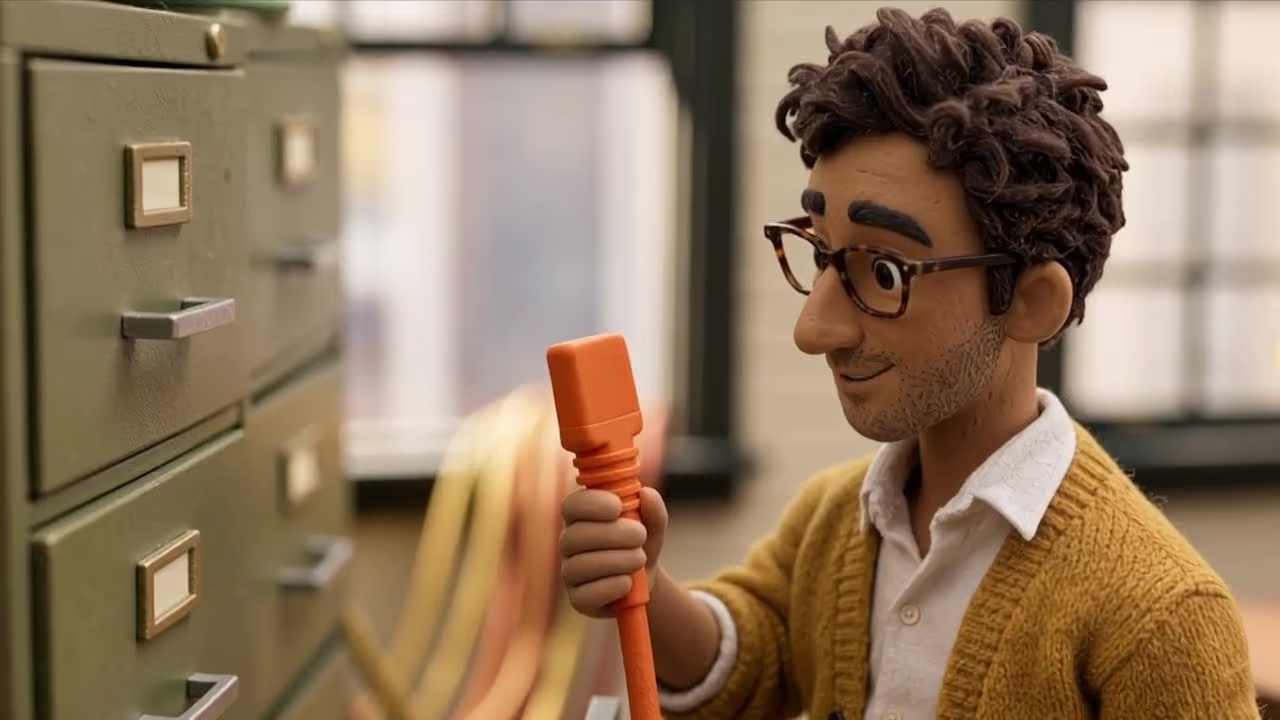 Play video: Your SEO MCP Setup Is a Mess of Wires. Here's the Fix
Lessons for B2B SaaS teams
- Pick a style AI is good at: miniatures, animals, illustration, stylised 3D. Avoid photoreal people.
- Lock characters before you generate. Changing faces were the most common complaint.
- One message per ad. Kalshi's ad works because it is simple and fast.
- Humour beats sentiment. Emotional human stories get judged hardest.
- Be open about using AI. Hidden AI becomes the headline.
- Use the savings to test more. When an ad costs days instead of months, make three versions and keep the winner.
If you want an ad built this way, see our AI video ads or price one.