
How we made a 50-second AI ad for Sitechecker.
Sitechecker, an SEO platform for agencies, needed an ad for one feature: all client data through one connector. We made it fully with AI as a stop-motion miniature: 4 consistent characters, 12 clips generated in Kling AI and voiced in ElevenLabs, with no camera, studio or actor.
- 50 s
- finished ad
- 4
- consistent characters
- 12
- AI clips
- 50
- comments on LinkedIn
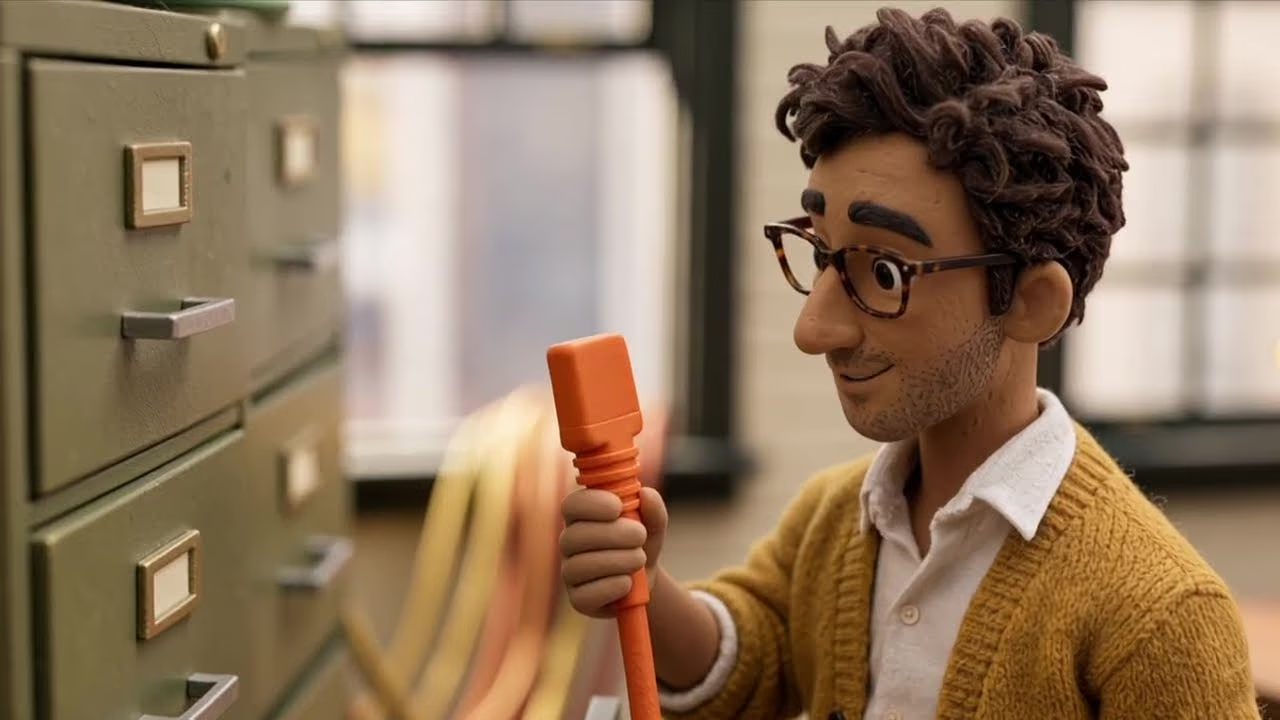 Play video: Your SEO MCP Setup Is a Mess of Wires. Here's the Fix
The brief
Sitechecker connects SEO data to AI assistants through an MCP server. For agencies with many clients, the old way meant one connector per client: a mess of wires that someone has to keep untangled. The feature fixes that with one connector for all client data.
The ad had to make that idea land in a B2B feed in under a minute, for people who have never heard the term MCP. The first draft ran close to a minute, explained too much and took too long to get to the point.
From a rough script to the final cut
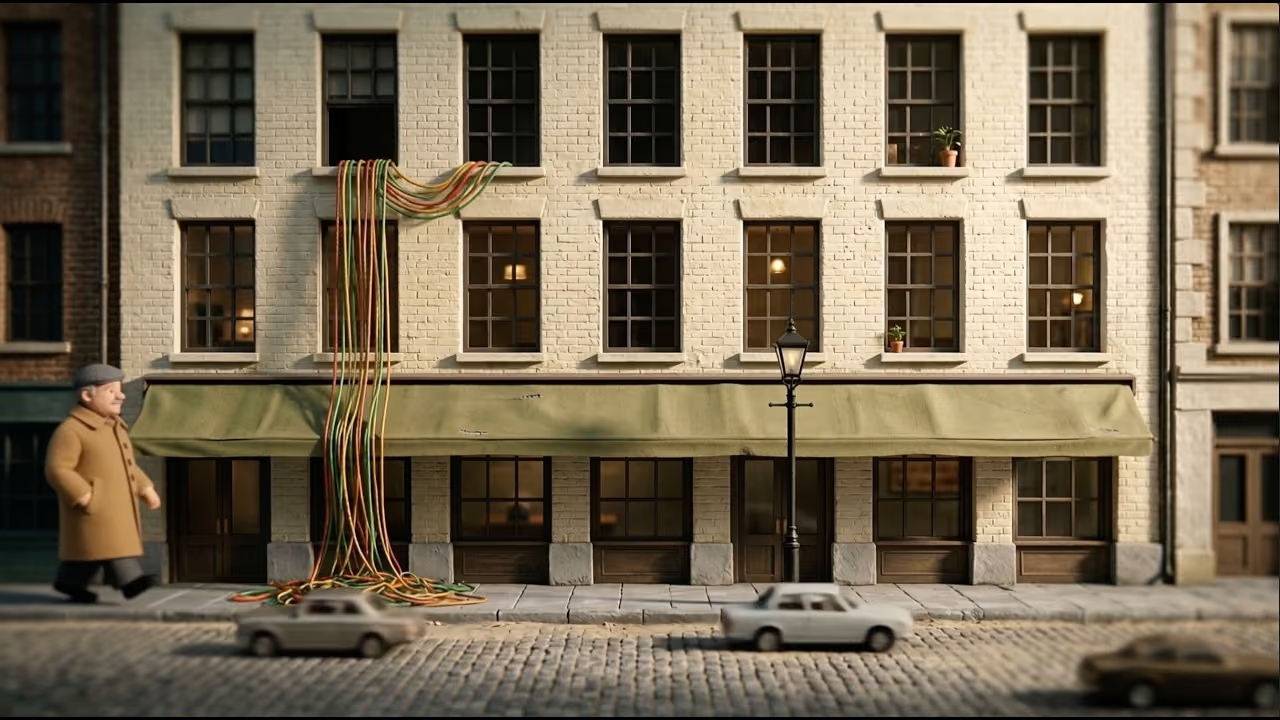
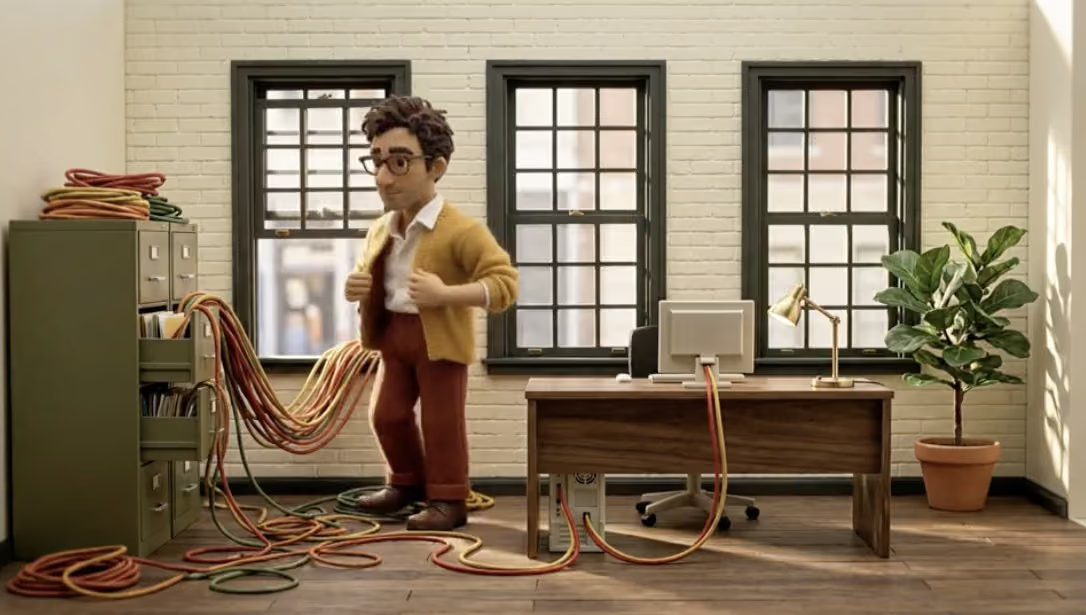
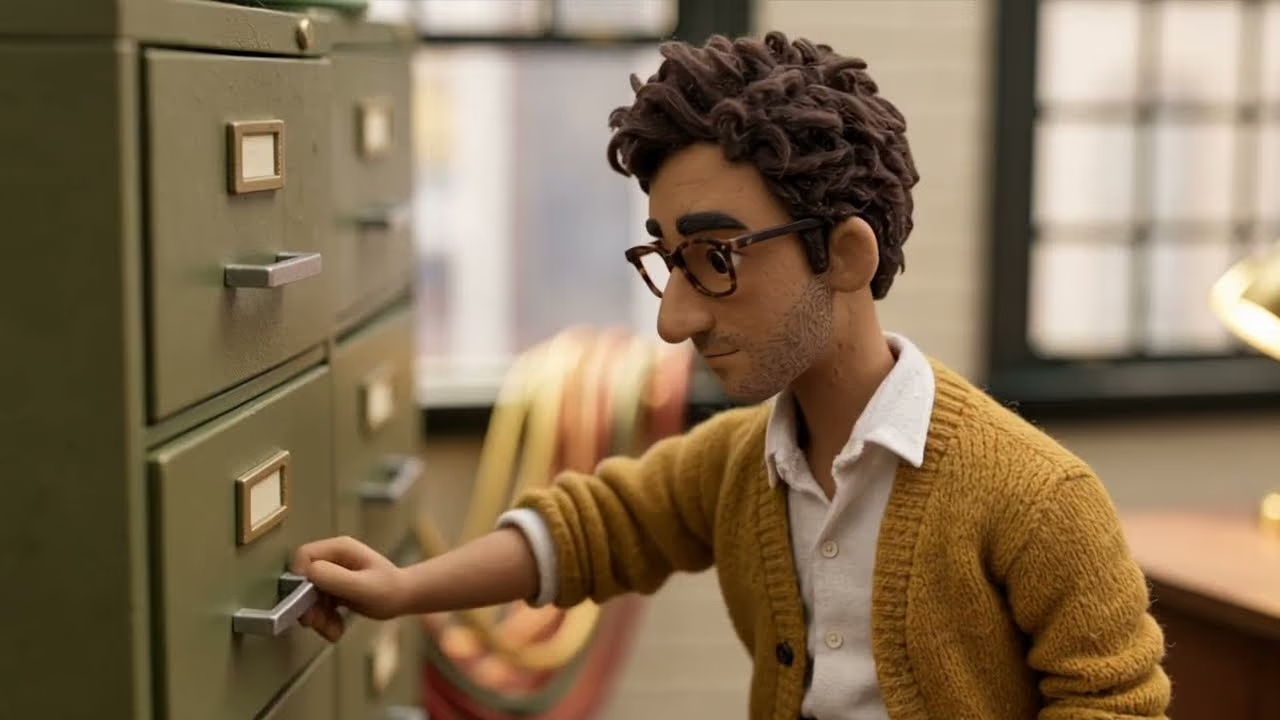
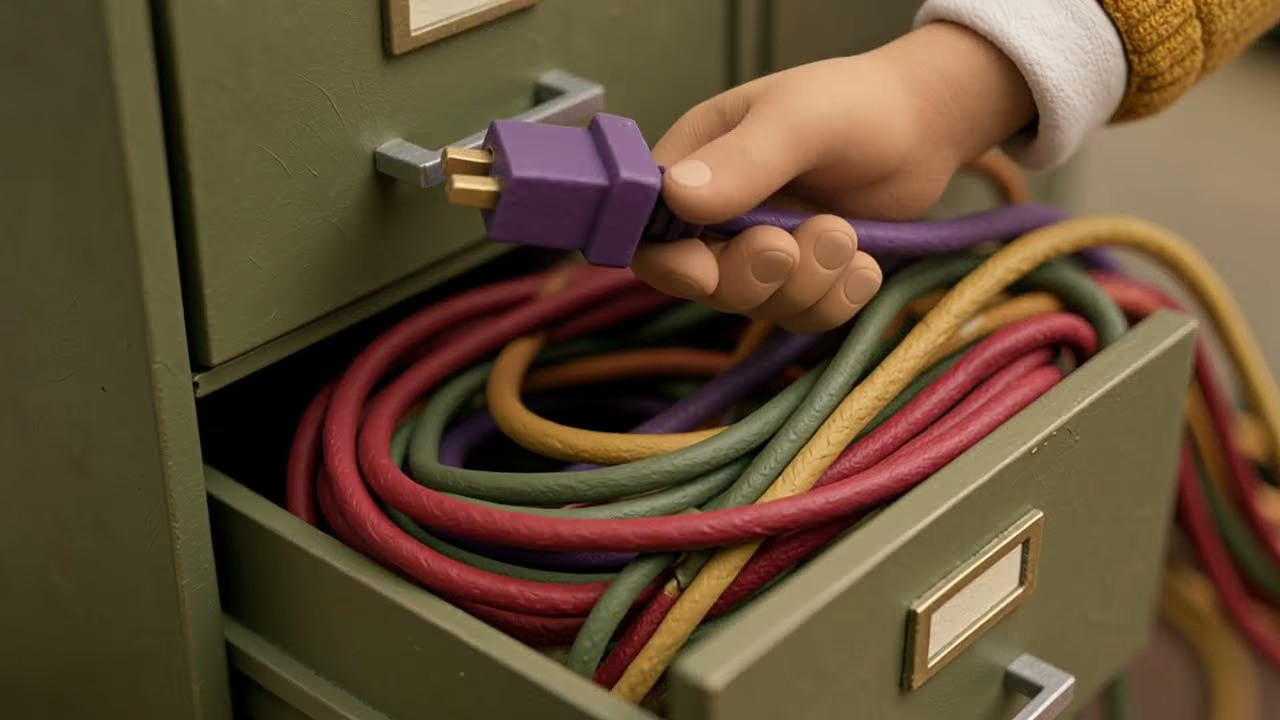
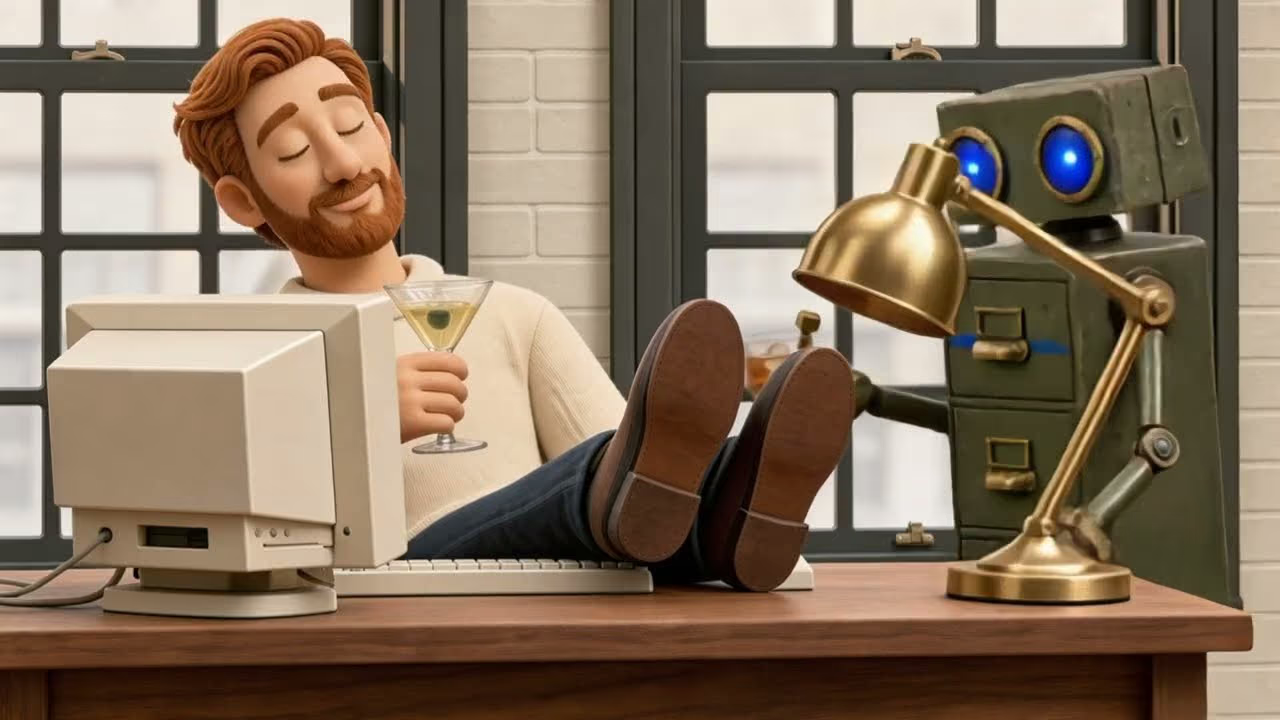
Six steps, in the order they happened. The stills are frames from the finished ad.
Tighten the story
We rebuilt the draft as a beat sheet: a hook in 3 seconds, three steps of escalation, one turn and one payoff. The metaphor came from the feature's own problem: connectors as physical cables that pile up.
Pick a look that stops the scroll
A miniature stop-motion diorama. It makes people look at the details in a B2B feed, and its slightly handmade feel hides the face and hand flaws that make AI video look cheap.
Write the production bible
A locked style block, colour rules (brand blue only where the product is), character and set locks, a shot card for every shot, voice notes and a list of risks to avoid.
Build the world, then cast it
The street and office sets were made first as reference images. Four characters were saved as Kling Elements with a bound voice, so every face and voice stays the same across the ad.
Generate 12 clips in Kling AI 4.0
Dialogue shots used the saved Elements for lip sync. Camera moves and transitions used first and last keyframes, made as still images before any video was generated.
Voice, captions, final cut
The narrator was voiced in ElevenLabs, and captions were planned from the script, so the ad works with the sound off in a feed.
Story before tools. One message per ad, one simple game per scene, built up in three steps.
How it landed
The ad went live in late October 2026 as a LinkedIn post promoting a free demo.
- 89
- reactions on the LinkedIn post
- 50
- comments
- 6
- reposts
What each tool did
| Compared on | Used for |
|---|---|
| Kling AI 4.0 | All 12 video clips. Four characters saved as Elements for consistent faces and lip-synced dialogue. |
| Nano Banana Pro | Set references, character sheets and the first and last keyframes for camera moves. |
| Figma Weave | Building the miniature street and office sets as reference boards. |
| ElevenLabs | The narrator's voice. |
What we would tell any SaaS team planning an AI ad
Lock everything before you render. Most AI video problems are consistency problems. Characters, sets and the style block were fixed before the first clip. That is what makes 12 separately generated clips look like one film.
Choose a look that suits the tool. Photoreal people are where AI still slips. Miniatures, illustration and stylised 3D let the tool do what it does well.
Make the product the only splash of brand colour. It keeps the feature in focus in every shot without a single logo slide.
Plan for sound off. Most feed views start muted. Captions written with the script read naturally; captions added at the end rarely do.
Questions about this ad
What would an ad like this cost?
A 50-second ad with 4 characters in a stop-motion look comes to $1,700 in our price calculator.
How did the characters stay the same in every shot?
Each character was saved as a Kling Element from a reference sheet, with a bound voice. Every shot that features a character uses the saved Element instead of a new description.
Was anything filmed?
No. Every set, character and shot was generated with AI. The only human-made parts are the story, the production bible, the direction and the edit.
Can we reuse the characters for more ads?
Yes. The client owns the characters and the production bible, so a follow-up ad starts with the same cast and look.
Want an ad like this for your product?
Send the feature you want to promote. We will reply with a story idea and a look that fits your brand.
- 370K+
- views for ActivityTimeline
Loading the calendar…